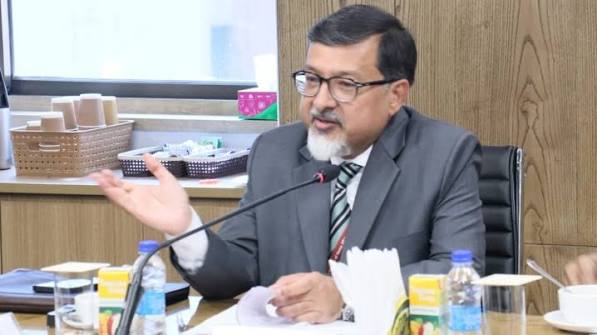
Shivakumar, former Kerala Chief Minister Pinarayi Vijayan, Punjab Chief Minister Bhagwant Mann, former Tamil Nadu Chief Minister M.K.
Stalin, Telangana Chief Minister Revanth Reddy, and others during the first Joint Action Committee meeting of States over the proposed delimitation of Parliamentary seats, in Chennai on March 22, 2025.
Delimitation is not an exercise in drawing electoral maps.
It is a key process that determines how the citizens of India are represented in the Lok Sabha and State Legislative Assemblies and also how political power is distributed among political parties, regions, and communities.
The problem with India’s present delimitation framework is that once the exercise is completed, there is no effective institutional forum to correct any illegality, arbitrariness, procedural breach, or jurisdictional excess before the new seat allocations and constituency boundaries become established.
In a modern constitutional democracy, such a design cannot be justified.
Public debate on delimitation has so far centred mainly on whether the freeze on inter-State representation in the Lok Sabha, fixed at 1971 Census levels, should continue after the first post-2026 Census.
A mechanical lifting of that freeze would punish with fewer Lok Sabha seats those States that faithfully implemented the national population policy, while rewarding those that failed to do so.
But far less attention has been paid to an equally vital issue: the infirmity of the delimitation process itself.
There is no permanent institutional mechanism for implementing delimitation.
Parliament gave effect to this mandate through successive Delimitation Acts of 1952, 1962, 1972, and 2002, each entrusting the exercise to an independent Delimitation Commission.
Under the Delimitation Acts (and even the unsuccessful Delimitation Bill, 2026), the Delimitation Commission’s orders acquire the force of law upon publication in the Gazette.