India's latest national discussion on water policy has placed municipal planning, conservation technology and cooperation between the Union and states at the centre of the response to rising demand.
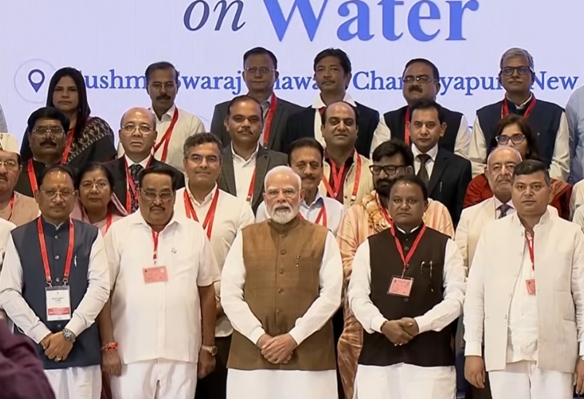
Prime Minister Narendra Modi chaired the concluding session of the two-day National Departmental Summit on Water organised by the Ministry of Jal Shakti. According to Akashvani News, he called for urban local bodies to be sensitised to population growth and future water requirements and proposed similar policy workshops for city administrations.
Why cities are central to the water question
Urban water security is shaped by decisions taken long before a shortage becomes visible. Population estimates influence the size of pipelines and treatment plants, while land-use rules determine whether lakes, floodplains and groundwater-recharge areas remain capable of supporting a growing city.
Bringing urban local bodies into the policy process could improve the connection between national programmes and municipal execution. City administrations control or influence water distribution, drainage, construction permissions, waste-water management and local conservation, but their technical and financial capacity varies widely.
Technology must be tied to measurable delivery
The Prime Minister called for wider adoption of water-saving technologies and learning from international practice. The practical value of that direction will depend on whether states and cities define measurable targets for leakage reduction, treated-water reuse, groundwater recharge and household service reliability.
Technology alone cannot resolve fragmented responsibility. Water utilities, municipal bodies, development authorities and state departments often hold different pieces of the system. Shared data and clearly assigned accountability are necessary if conservation projects are to affect supply rather than remain isolated demonstrations.
What should be tracked next
The summit is intended to produce time-bound action plans. Readers should therefore look for published responsibilities, deadlines and financing arrangements, followed by city-level reporting on supply continuity, water quality, network losses and treatment capacity.
The policy signal is clear: water planning must anticipate urban growth instead of responding only after scarcity intensifies. The test is whether the summit's recommendations become transparent programmes that residents can evaluate against service conditions in their own cities.