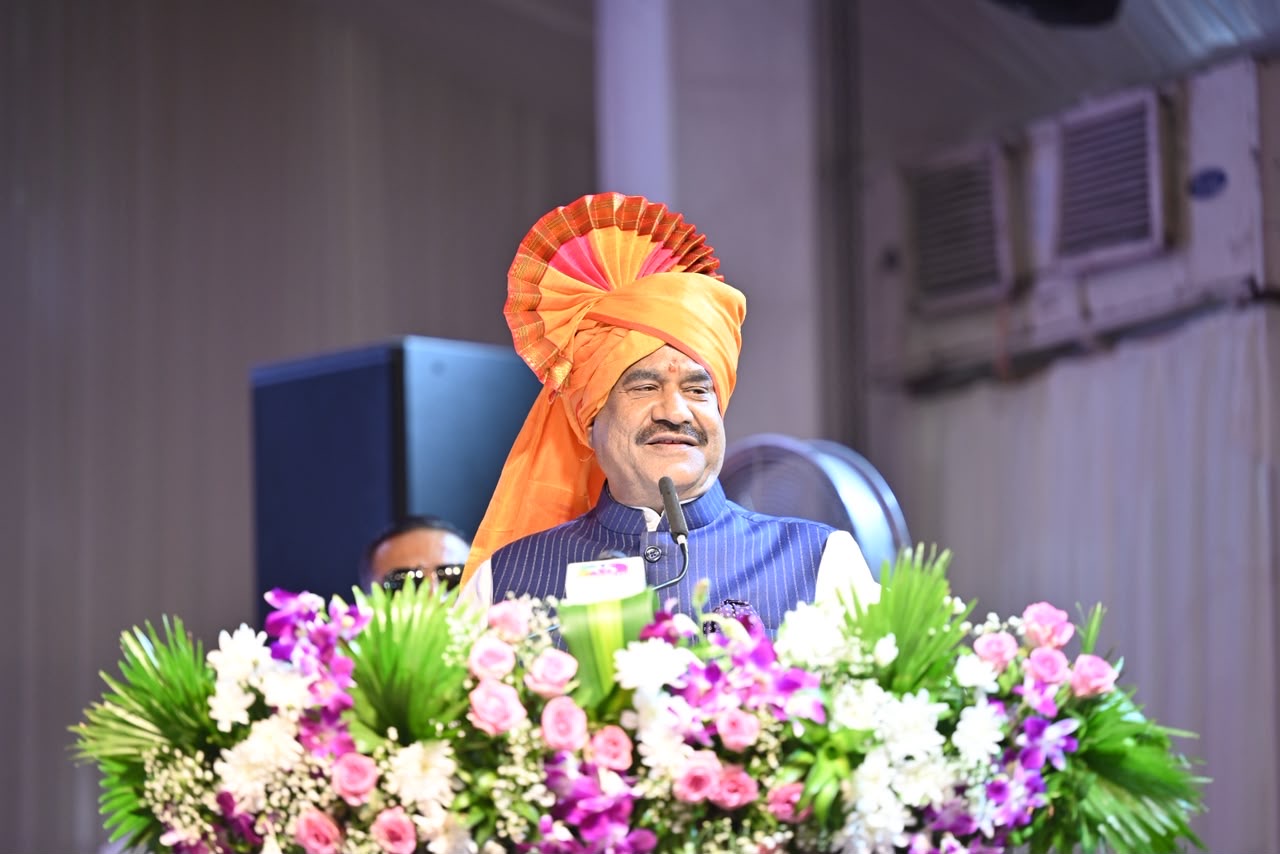
Referring to Nashik as a land of spiritual consciousness, social awareness and extraordinary valour, Shri Birla observed that the sacred Trimbakeshwar Mahadev Temple, one of the twelve Jyotirlingas, provides spiritual energy, gives people the courage to endure hardship and guides society towards public welfare. Recalling the rich spiritual legacy of the region, he noted that the teachings of Sant Dnyaneshwar Maharaj and Sant Tukaram Maharaj continue to inspire society. He further observed that the courage and valour of Chhatrapati Shivaji Maharaj continue to provide inspiration and direction to the youth of the country.
On the need to expand healthcare services in India, Shri Birla noted that the Government of India has been working to promote the health and well-being of all. He observed that Prime Minister Shri Narendra Modi has consistently encouraged a healthy lifestyle and that Yoga has today become an integral part of the daily lives of people across the world. He stressed the need to adopt Yoga and an environmentally sustainable lifestyle to ensure a healthy and disease-free life.
Shri Birla observed that the Government of India has taken several important steps to strengthen the country's healthcare system. Medical infrastructure has been expanded, seats in medical colleges have been increased and major initiatives, including Ayushman Bharat, have been launched. He added that the participation of the private sector is also yielding meaningful results, with new medical colleges being established, medical infrastructure being strengthened and greater emphasis being placed on research alongside the treatment of serious diseases.
Emphasizing the importance of medical research, Shri Birla called upon Ashoka Health City to establish research and innovation facilities alongside its Mother and Child Hospital, cancer care and super-speciality services. He stressed that medical professionals and institutions must prepare themselves to address the challenges posed by existing as well as emerging diseases. India, he said, must further strengthen its capabilities in medical research and innovation.
Referring to India's growing capabilities in science and healthcare, he recalled that there was a time when India depended on developed countries in several areas of healthcare. However, during the COVID-19 pandemic, Indian scientists made a significant contribution to the development of vaccines, which served humanity during an unprecedented global crisis. He stressed that the Government and the private sector must work together to promote research, science and technology and develop effective responses to emerging diseases.
Shri Birla further emphasized the need to establish research and innovation centres in universities and colleges. Noting that new diseases can emerge unexpectedly and pose serious challenges, he observed that strengthening medical infrastructure must go hand in hand with investment in research, innovation and scientific capabilities.
Expressing satisfaction over the healthcare facilities being provided by the institution, Shri Birla observed that Ashoka Health City is serving not only Nashik but also the wider North Maharashtra region. Referring to the newly inaugurated Mother and Child Hospital, he emphasized the need for high-quality healthcare facilities dedicated to the well-being of mothers and children. He called for intensified efforts to reduce infant mortality in the country. He observed that better hospitals and quality healthcare facilities are essential for achieving this objective. He urged private institutions to expand healthcare services with a spirit of social responsibility and public service so that their benefits reach all sections of society.
Highlighting the complementary roles of the Government and the private sector, Shri Birla reiterated that the need of the hour is to ensure that affordable and quality healthcare reaches the last person in society. He expressed confidence that Ashoka Health City would emerge as an important centre for the treatment of serious diseases and would provide affordable, quality and sustainable healthcare while also promoting medical research.
Concluding his address, Shri Birla emphasized that medical education must be linked with the spirit of public service. He observed that students receiving medical education should be encouraged to serve in villages and rural areas so that quality healthcare reaches people living in the remotest parts of the country. He stressed that every citizen, including those at the last mile, must have access to assured treatment in the event of serious illness.
Minister for Food, Civil Supplies & Consumer Protection, Government of Maharashtra Shri Chhagan Bhujbal; Minister of Energy, Government of Rajasthan, Shri Hiralal Nagar; Members of Parliament and other dignitaries were present on the occasion.