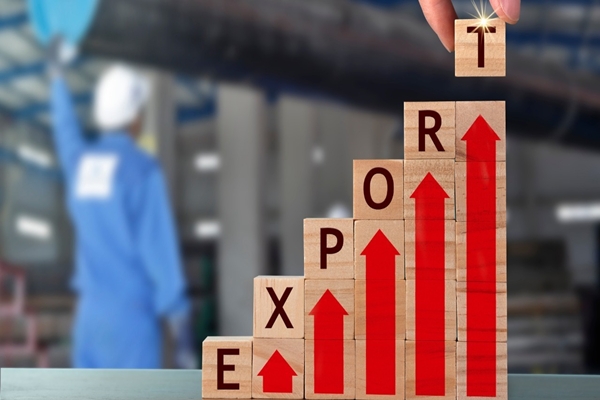
India's export performance opened the financial year on a stronger note, with official reporting carried by Akashvani saying total exports during April-June 2026-27 crossed 232 billion dollars.
Trade reading
The export gains were attributed to a mix of sectors including gems and jewellery, engineering goods, organic and inorganic chemicals, electronic goods and rice. Electronics remained a closely watched category, with June exports reported at 4.93 billion dollars compared with 4.14 billion dollars a year earlier.
The numbers are important because merchandise and services exports influence jobs, industrial utilisation, currency stability and corporate investment. Stronger engineering and electronics shipments suggest that some manufacturing-linked export segments are still finding demand despite a difficult global trade environment.
Imports, however, also rose sharply. June imports were reported at 88.76 billion dollars, an increase of more than 26 percent. That means the trade balance will still depend on commodity prices, domestic demand and whether export growth can keep pace with the import bill.
Business signal
For businesses, the quarter gives an early signal rather than a full-year trend. Exporters will watch shipping costs, exchange-rate movement, demand from the United States and Europe, and the pace of trade negotiations that can open or restrict market access.
The data also shows why policy support for logistics, testing standards, customs processing and credit remains important. A higher export base is useful only if firms can deliver reliably, meet quality standards and avoid delays at ports and certification points.
Electronics exports will draw special attention because they connect manufacturing policy with global supply chains. Sustained growth in this segment would suggest that assembly, components, design support and export logistics are beginning to align more effectively.
The import rise is the caution in the story. If imports climb faster because of energy, gold or capital goods, policymakers will need to separate productive investment demand from pressures that widen the trade deficit without adding future capacity.