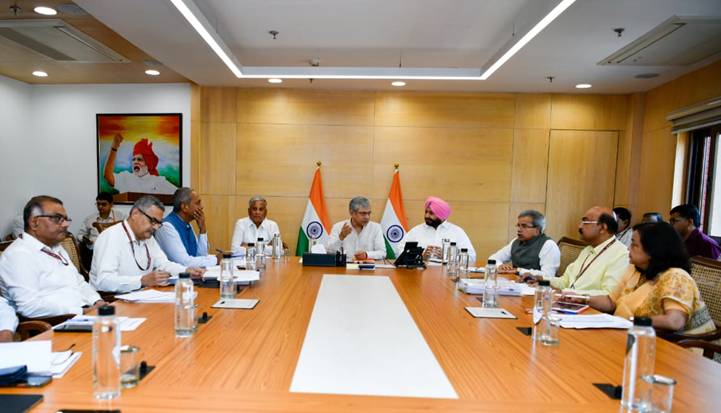
An important initiative was discussed to enable large-scale transportation of fly ash through the railway network. The objective is simple yet transformative: move fly ash efficiently from power plants to industries where it can be used to build roads, manufacture bricks, produce cement and support infrastructure development across the country. Union Ministers of State for Railways Shri V. Somanna and Shri Ravneet Singh Bittu were also present during the meeting.
Nearly 340 million tonnes of fly ash is generated every year from thermal power plants. For decades, this grey burden sat heavy around the smokestacks. Now, Indian Railways is changing that through a green initiative, creating a dedicated logistics network of specialised containers and rail corridors. This network will transport the waste material from where it is generated to where it is needed.
The beauty of this initiative lies in its simplicity: what the power plant discards, the cement plant treasures. Fly ash, rightly moved and rightly used, is a raw material for cement, concrete, blocks and boards. More affordable fly ash means cheaper bricks, lower cement prices, and ultimately more accessible housing across urban and rural India alike.
Contained within rail wagons and purpose-built logistics systems, fly ash travels cleanly, arriving not as a pollutant but as a productive participant in India's infrastructure story.
This is, at its heart, the grammar of a circular economy where waste becomes wealth, burden becomes the building block.
Dharmendra Tewari/ Dr. Nayan Solanki/ Ritu Raj/ Manik Sharma.
The proposal addresses both waste handling and industrial supply. Its effectiveness will depend on loading infrastructure at power plants, suitable containers, rail capacity and reliable delivery to cement, brick and construction users. The review did not announce a completion timetable or final corridor map.