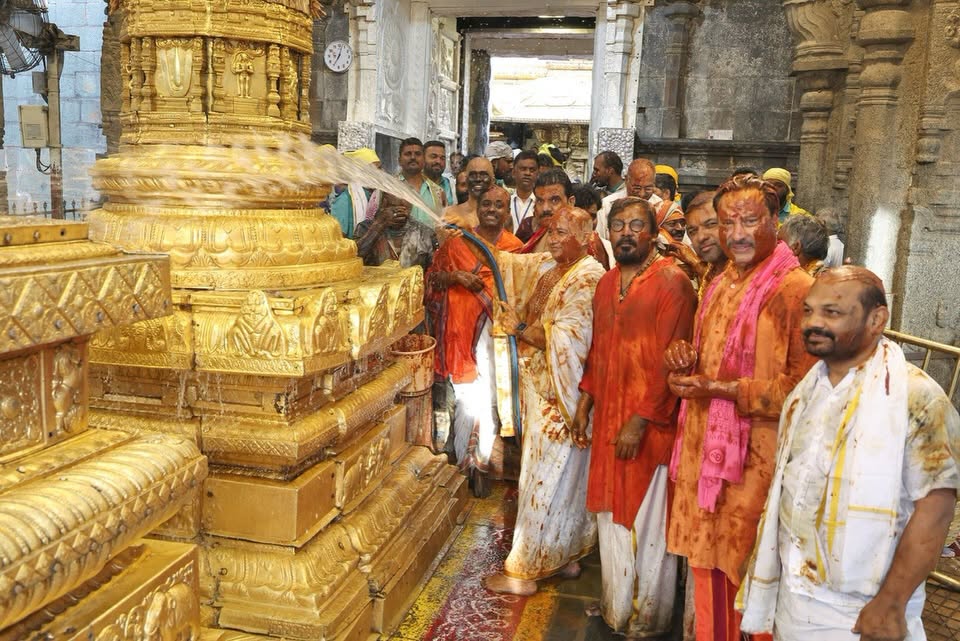
The Sri Venkateswara Temple at Tirumala carried out Koil Alwar Tirumanjanam on July 14 as part of its preparations for Anivara Asthanam, the annual observance scheduled for July 17. The ceremony combines a detailed cleansing of the temple with prescribed rituals before regular public darshan resumes.
Temple staff cleaned the areas surrounding the sanctum as well as the sub-shrines, kitchen, walls, ceilings and objects used in worship. The scale of the exercise distinguishes the ceremony from routine upkeep: it covers both the spaces central to worship and the supporting areas required for the temple's daily rituals.
After the physical cleaning, the premises were sprinkled with a fragrant sacred mixture made with sandalwood, turmeric, camphor, saffron and other aromatic ingredients. Special worship and Naivedyam, the ritual offering of food to the presiding deity, followed the purification process.
Devotees were then permitted to enter for Sarva Darshan. The sequence is important to visitors because access is coordinated around the ceremonial work, allowing the cleaning and offerings to be completed before the general queue is reopened.
Koil Alwar Tirumanjanam is held four times each year at Tirumala. The temple schedules it before Ugadi, Anivara Asthanam, the annual Brahmotsavam and Vaikuntha Ekadasi, linking the same purification practice to four major points in its ritual calendar.
The July ceremony specifically prepares the complex for Anivara Asthanam. Rather than being a standalone public spectacle, it is one stage in the temple's established sequence of preparations for the annual observance.
For pilgrims planning a visit, the report provides two practical points: the preparatory cleansing has been completed, and Anivara Asthanam will be observed on July 17. It also documents the material detail of a tradition that visitors usually encounter only through changes in darshan timing and the temple's ceremonial arrangements.