The Union government coordinated with Bihar and Uttar Pradesh after a sudden rise in Nepal’s Trishuli river created concern about downstream effects in the Gandak system, placing border administrations and National Disaster Response Force teams on alert.
Home Minister Amit Shah spoke with the chief ministers of both states on 26 August. The Home Ministry said state authorities had begun precautionary measures, including evacuation where required and support for communities near the India–Nepal border.
Why cross-border river alerts demand political coordination
Flood risk does not stop at an international boundary. Information about upstream water levels must move quickly from Nepal through India’s Central Water Commission and Union ministries to district officials who control warnings, shelters, transport and local rescue resources. A delay at any point can reduce the time available to move people and livestock from vulnerable areas.
The Home Ministry attributed the abrupt rise near Furke Khola to suspected flash-flood or glacial-lake-outburst activity near the Nepal–China border. It said the possible downstream impact was being tracked along the Gandak, while later readings indicated that reservoir levels on the Nepal side were falling and there was no cause for panic in India.
Multiple agencies, one public message
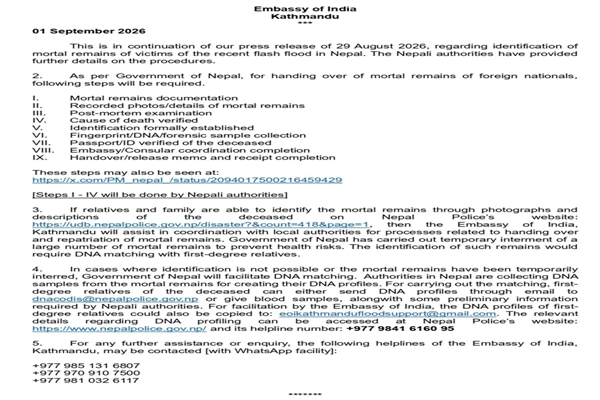
Officials from the home, external affairs, water resources and defence establishments were involved in monitoring. The Ministry of External Affairs and India’s embassy in Kathmandu also issued assistance numbers for Indian nationals affected in Nepal amid reports of missing tourists.
The response illustrates why disaster management is a governance story as much as a weather story. The Union government supplies interstate coordination and specialised forces; state governments organise evacuation and relief; district administrations must translate forecasts into specific local action. Public communication must remain precise enough to prompt caution without triggering panic.
The operational test is whether warnings reached exposed settlements in time, whether evacuation and shelter arrangements matched local need, and whether information about missing people was consolidated across agencies. Those outcomes, rather than the alert alone, will show how effectively the coordination worked.